
Inlays and Onlays: A Conservative Repair
When a cavity or crack is too large for a filling but doesn't need a full crown, an inlay or onlay is a strong, natural-looking middle ground.
What's the Difference?
Both are custom-made porcelain restorations bonded directly to your tooth. The difference is how much of the chewing surface they cover.
- Inlays fit inside the grooves of a tooth's chewing surface — ideal for damage that stays within the cusps
- Onlays cover one or more of the tooth's cusps, offering more coverage when damage extends over the edge
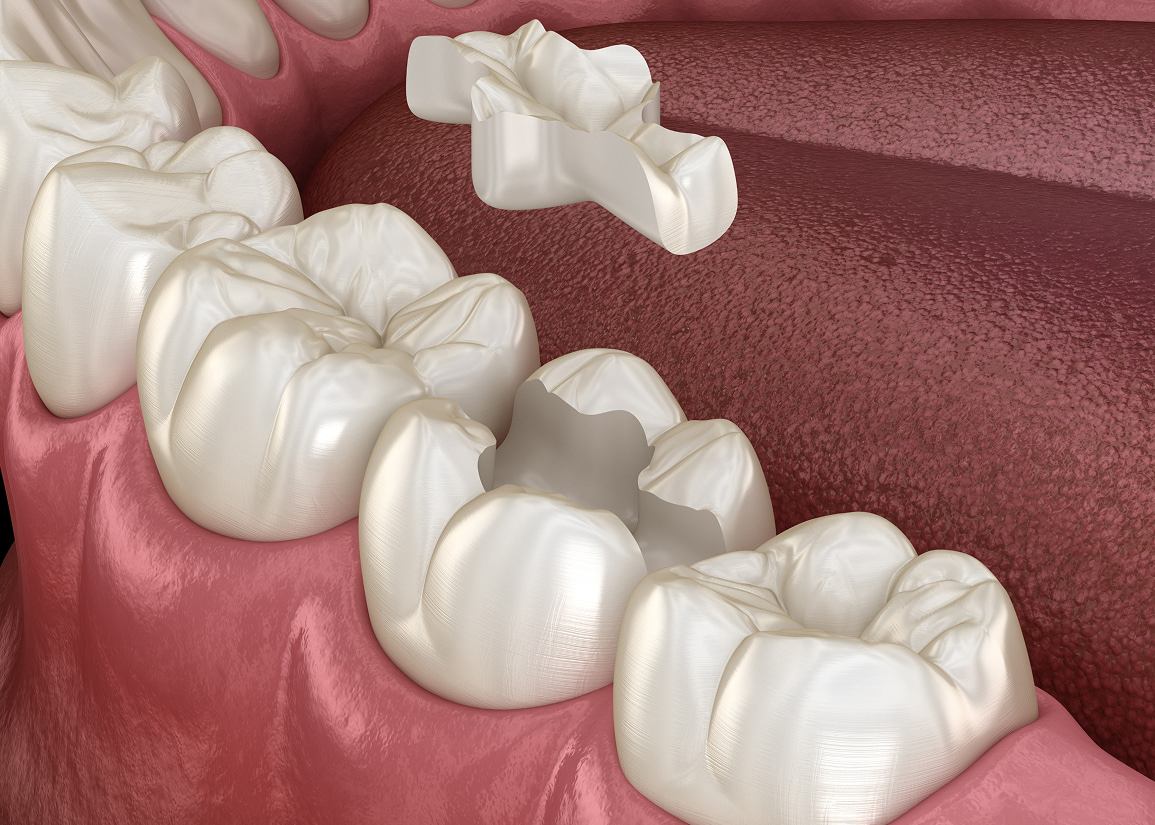
How Each Restoration Works
Inlay
Fits precisely inside the grooves of the chewing surface. Stronger than a filling and keeps the natural cusps intact.
Onlay
Covers one or more cusps when damage extends beyond the grooves. Restores the tooth's full chewing surface.
Just Two Visits
Visit one: we prepare the tooth and take an impression. Visit two: the custom restoration is bonded permanently in place.

The Benefits of a Conservative Repair
- Keep more of your natural tooth than a crown
- Custom-made from tooth-colored porcelain or composite
- Very strong and long-lasting
- Help protect weakened teeth from cracking
Frequently Asked Questions
How many visits does it take?
Usually two: one to prepare the tooth and one to bond the final restoration.
How long do inlays and onlays last?
With good care, they can last 10 to 30 years.
Keep More of Your Natural Tooth
Ask us whether an inlay or onlay is the right repair for you.