
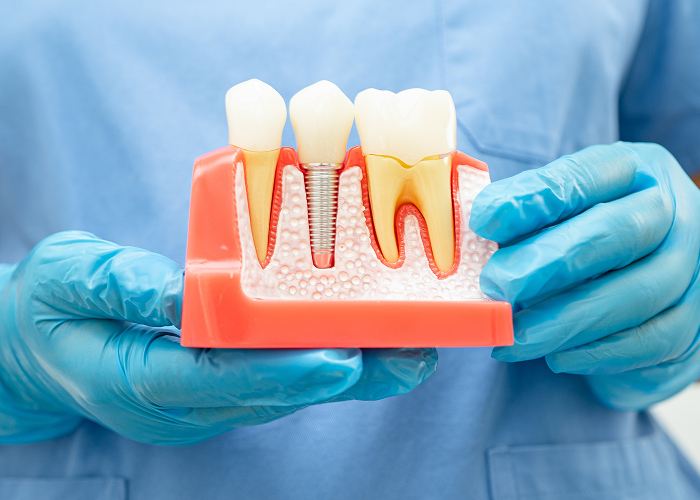
Dental implants are one of the best long-term ways to replace missing teeth. It’s natural to wonder what they cost and whether they fit your budget. Here’s what shapes the price and how to plan for it.
What affects the cost
- Number of teeth: A single implant costs less than a full-arch solution like All-on-4.
- Bone health: Some patients need a bone graft before an implant can be placed.
- Type of restoration: A crown, bridge or implant-supported denture each has its own cost.
- Extractions: Removing a damaged tooth first adds to the plan.
- Sedation: Optional sedation adds comfort and a separate fee.
Why implants can save money over time
Bridges and dentures often need repair or replacement every 5 to 15 years. A well-cared-for implant can last decades. Implants also help prevent the bone loss that changes the shape of your face over time.
Making implants affordable
- Many dental plans cover part of the crown or related procedures.
- CareCredit offers monthly payment plans with no up-front cost.
- Your treatment can be staged to spread costs over time.
How to choose a provider
Look for a practice that handles planning, surgery and the final restoration in-house. It saves you trips between offices and keeps your whole team on the same page. Ask about 3D imaging, sedation options and what’s included in your quote.
At Clark St Dental of Lakewood, every step of implant care happens under one roof at all 11 of our offices.